Portland Trail Blazers
2026-27 Cap Sheet • Western • Northwest
Over Cap, Below First Apron
First Apron
Thresholds
The first tax apron ($195,945,000 in 2025-26) restricts teams from using the non-taxpayer MLE, bi-annual exception, sign-and-trades to acquire players, and prior-year TPEs. Teams above the first apron can only take back 100% of outgoing salary in trades.
Open in glossary →
Over Cap, Below First Apron
First Apron
Thresholds
The first tax apron ($195,945,000 in 2025-26) restricts teams from using the non-taxpayer MLE, bi-annual exception, sign-and-trades to acquire players, and prior-year TPEs. Teams above the first apron can only take back 100% of outgoing salary in trades.
Open in glossary →
Curry's Last Dance
Viewing a shared scenario. Clone it to make your own edits.
Scenario Trades (1)
↙
Trade with POR
mirrored
Valid
Sent: Donovan Clingan
Received: Brook Lopez
Team Salary
$193.8M
117.4% of cap
+ $14.7M cap holds
Cap Hold
Fundamentals
A placeholder amount charged against a team's cap for free agents whose rights they hold. Cap holds count toward team salary even though no contract exists. Teams must renounce a player's rights to remove the cap hold, but doing so means losing the ability to re-sign that player using Bird rights.
Open in glossary →
$208.5M
Salary Cap
Salary Cap
Fundamentals
The maximum amount a team can spend on player salaries, set annually by the NBA based on Basketball Related Income (BRI). For 2025-26, the salary cap is $154,647,000. Unlike the NFL, the NBA's cap is a "soft cap" — teams can exceed it using various exceptions.
Open in glossary →
$165.0M
Cap Space
Cap Space / Cap Room
Fundamentals
The difference between a team's current salary and the salary cap. Teams with cap space can sign free agents or absorb salary in trades without sending matching salary out.
Open in glossary →
-$28.8M
w/ holds:
-$43.5M
Tax Line
Luxury Tax Line
Thresholds
The salary threshold above which teams must pay the luxury tax. Set at $187,895,000 for 2025-26. Separate from the salary cap — a team can be over the cap without paying tax.
Open in glossary →
$201.0M
Tax Bill
Luxury Tax
Fundamentals
A dollar-for-dollar (or more) penalty paid by teams whose total salary exceeds the luxury tax line. For 2025-26, the tax line is $187,895,000. Tax rates increase with each bracket and are higher for repeat offenders.
Open in glossary →
$0
Roster
Roster Limits
Roster
NBA teams can carry up to 15 players on standard contracts plus up to 3 two-way contracts (18 total). The minimum is 14 on opening day and 13 during the season. If a team has fewer than 12 players, an incomplete roster charge is assessed for each missing spot.
Open in glossary →
14/15
+3/3
Cap Position
Cap
Tax
1st
2nd
Cap
Salary Cap
Fundamentals
The maximum amount a team can spend on player salaries, set annually by the NBA based on Basketball Related Income (BRI). For 2025-26, the salary cap is $154,647,000. Unlike the NFL, the NBA's cap is a "soft cap" — teams can exceed it using various exceptions.
Open in glossary →
$165.0M
Tax
Luxury Tax Line
Thresholds
The salary threshold above which teams must pay the luxury tax. Set at $187,895,000 for 2025-26. Separate from the salary cap — a team can be over the cap without paying tax.
Open in glossary →
$201.0M
1st Apron
First Apron
Thresholds
The first tax apron ($195,945,000 in 2025-26) restricts teams from using the non-taxpayer MLE, bi-annual exception, sign-and-trades to acquire players, and prior-year TPEs. Teams above the first apron can only take back 100% of outgoing salary in trades.
Open in glossary →
$209.0M
2nd Apron
Second Apron
Thresholds
The second tax apron ($207,824,000 in 2025-26) imposes the strictest restrictions. Teams above it cannot: aggregate salaries in trades, send cash in trades, use any MLE, send players via sign-and-trade, or trade first-round picks 7 years out. Their distant first-round picks are also "frozen."
Open in glossary →
$222.0M
Team $193.8M
w/ Holds
Cap Hold
Fundamentals
A placeholder amount charged against a team's cap for free agents whose rights they hold. Cap holds count toward team salary even though no contract exists. Teams must renounce a player's rights to remove the cap hold, but doing so means losing the ability to re-sign that player using Bird rights.
Open in glossary →
$208.5M
Cap Hold
Fundamentals
A placeholder amount charged against a team's cap for free agents whose rights they hold. Cap holds count toward team salary even though no contract exists. Teams must renounce a player's rights to remove the cap hold, but doing so means losing the ability to re-sign that player using Bird rights.
Open in glossary →
Season
Swipe salaries to change year. Contract totals include remaining option years, not cap holds.
| # | Player | Pos | Age | 26-27 | 27-28 | 28-29 | 29-30 | 30-31 |
|---|---|---|---|---|---|---|---|---|
| 1 |
 Ja Morant
|
PG | 27 | $42.2M | $44.9M | $41.3M | — | — |
| 2 |
 Jrue Holiday
|
PG | 36 | $34.8M | $37.2M PO | $55.8M | — | — |
| 3 |
 Shaedon Sharpe
|
SG | 23 | $20.1M | $21.7M | $23.3M | $24.9M | $37.4M |
| 4 |
 Toumani Camara
|
SF | 26 | $18.1M | $19.5M | $21.0M | $22.4M | $33.6M |
| 5 |
 Robert Williams III
|
C | 28 | $14.0M | $14.5M | $15.0M | $28.5M | — |
| 6 |
 Scoot Henderson
|
PG | 22 | $13.6M | $40.8M | — | — | — |
| 7 |
 Damian Lillard
|
PG | 36 | $13.4M | $14.1M PO | $18.3M | — | — |
| 8 |
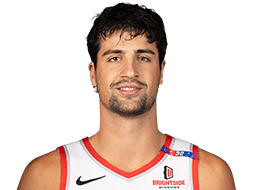 Deni Avdija
|
SF | 25 | $13.1M | $11.9M | $22.6M | — | — |
| 9 |
 Brook Lopez
via GSW
Brook Lopez
via GSW
|
C | 38 | $9.2M | $11.0M | — | — | — |
| 10 |
 Yang Hansen
|
C | 21 | $4.6M | $4.9M TO | $7.5M TO | $22.4M | — |
| 11 |
 Micah Potter
|
C | 28 | $2.8M NG | $2.5M | — | — | — |
| 12 |
 Vit Krejci
|
SF | 26 | $2.7M NG | $3.0M TO | $5.7M | — | — |
| 13 |
 Sidy Cissoko
|
SG | 22 | $2.5M | $2.5M | — | — | — |
| 14 |
 Blake Wesley
|
SG | 23 | $2.5M | — | — | — | — |
| 15 |
 Branden Carlson
|
C | 27 | $2.4M | $2.5M | — | — | — |
|
Dead Money
(1 player)
|
||||||||
| — |
Didi Louzada
Stretched
|
— | — | $268K | $268K | $268K | — | — |
|
Two-Way Contracts
(3 of 3 slots • not counted against the cap or the 15-man roster)
|
||||||||
| — |
 Jayson Kent
Two-Way
Jayson Kent
Two-Way
|
SF | 24 | $678K | — | — | — | — |
| — |
 John Tonje
Two-Way
John Tonje
Two-Way
|
SG | 25 | $678K | — | — | — | — |
| — |
 Chris Youngblood
Two-Way
Chris Youngblood
Two-Way
|
SG | 24 | $678K | — | — | — | — |
| Total | $193.8M ($208.5M) | $171.9M ($231.1M) | $67.0M ($210.7M) | $47.3M ($98.2M) | $0 ($71.0M) | |||
| Cap Space | -$43.5M | -$49.6M | -$11.0M | $121.4M | $170.6M | |||
| 1st Apron Space | $15.2M | $58.0M | $185.9M | $230.8M | $306.0M | |||
| 2nd Apron Space | $28.2M | $72.3M | $201.6M | $248.2M | $325.0M | |||
Legend:
Regular = under contract • Orange
=
Cap Hold
Fundamentals
A placeholder amount charged against a team's cap for free agents whose rights they hold. Cap holds count toward team salary even though no contract exists. Teams must renounce a player's rights to remove the cap hold, but doing so means losing the ability to re-sign that player using Bird rights.
Open in glossary →
• Blue
= projected/edited • Struck
= option declined • PO
Player Opt • TO
Team Opt • ETO
Early Term • NG
= non-guaranteed •
Cap projections assume ~10% annual growth